Vehicles with low clearance need extra attention when they are being transported. Sports cars, luxury coupes, modified vehicles, classics, exotics, and performance cars are generally closer to the ground than regular vehicles. The lower drop looks nice on the road, but makes for a more delicate load and long-distance shipping. When enclosed trailers protect low-clearance vehicles, a vehicle owner can pick the right method of transport and prepare beforehand.
Enclosed auto transport is a good option for vehicles that require added protection, controlled handling, and more careful loading. The protective covering safeguards the vehicle against road debris, exposure to the elements, and other outside forces, while also allowing vehicles to employ better use of carriers’ equipment more suited for specialty vehicles. This guide explains the process and how to get https://www.car-transport.org/.
Understand Why Low-Clearance Vehicles Need Special Handling
A low-clearance vehicle has a smaller distance between the car’s lowest part and the floor. Steep ramps, rough loading angles, uneven pavement and sudden changes in slope can all cause problems. If a car is loaded improperly, components such as front splitters, side skirts, exhausts, bumpers and underbody panels can come close to the ground.
That is the reason why standard transport planning may not suffice always. A standard open carrier can successfully transport numerous vehicles, however a very low car may require extra ramp angles and/or equipment. Because enclosed trailers are frequently used for luxury, exotic, collector, and performance vehicles, they usually allow more careful loading.
For instance, a Caledon resident may choose to be more gentle when towing a lowered Corvette, Porsche 911, Lamborghini or classic muscle car, as opposed to a common every day car like a mid-sized sedan. The purpose is not only to displace the automobile but to load and unload it without unwanted contact with the ground.
Inquire about the Liftgate or low-angle loading
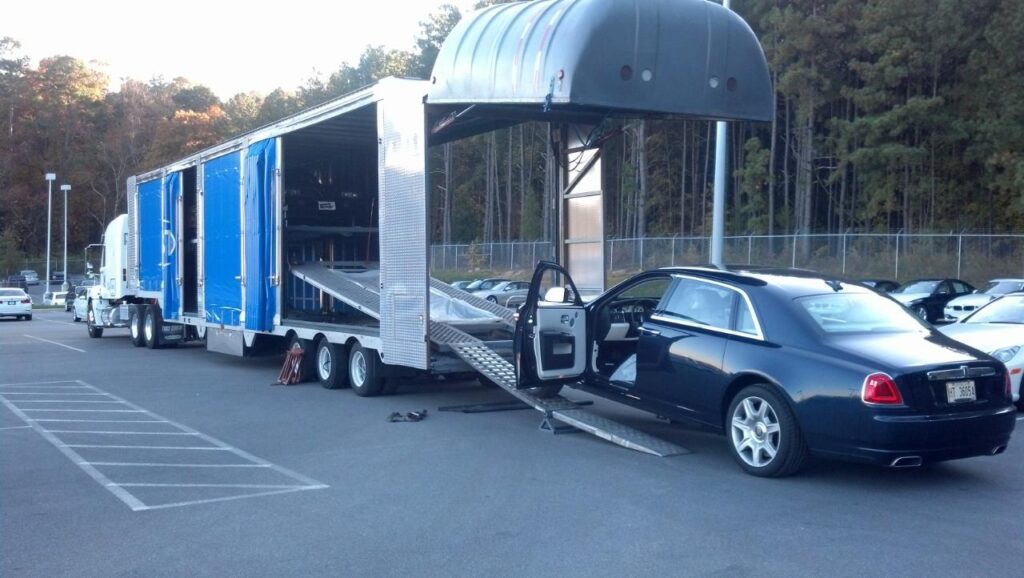
Specialized loading equipment is one major way enclose trailers help . Some enclosed carriers utilize long ramps or low-angle loading systems to walk cars on. The tools lessen the incline of the approach, making it easier for the vehicle to enter the trailer smoothly.
A hydraulic liftgate can be especially useful because you can place the car on a flat platform and raise it into the trailer rather than drive it up a steep ramp. This minimizes the risk of scraping for cars with low front lips or sensitive underbody parts.
When you book transportation, don’t just say the car is “low.” Specify. Indicate if the vehicle has aftermarket suspension, front splitters, body kits, custom exhaust, or little ground clearance. If you know the rough clearance in inches share it.
This information will help the transporter decide which carrier and which equipment is appropriate.
Use enclosed protection for your paint, trim, and body
Another way an enclosed trailer protects low clearance vehicles is the exterior. Belonging to the upper class, the low clearance cars are higher-value vehicles with a special finish, custom paint, carbon fiber parts, polished wheels or rare trim. The enclosed trailers protect items from road debris, rain, snow, dust and any loose material.
A lot of cars can be transported safely via open transport. However, an enclosed transport offers more care. The vehicle rides in an enclosed trailer, protecting it from the elements.
It can be especially useful for show cars, freshly detailed cars, auction buys, collector cars, or cars that are being brought to an event. If arrival and appearance are of equal importance, it is likely that enclosed is stronger.
Clean the vehicle and take detailed pictures before shipping. The orderly paintwork and well-maintained paperwork will greatly assist the inspector during pick-up.
Make Sure Your Car Is Ready
Even the best trailer works more efficiently when the vehicle is ready. First, take away personal belongings, lose accessories, toll tags, dash cams, parking pass, and valuables. If your vehicle has a detachable front lip, a low-hanging accessory, or other removable parts on the outside, check whether these remove before transporting.
Examine the tire pressure condition battery. A low battery can delay loading as the vehicle may have to be carefully repositioned. To avoid adding extra weight, keep the fuel tank at roughly 1/4 capacity so that the car moved.
Informed the driver about the adjustable suspension/lift mode of the vehicle, if applicable. Some high performance cars are able to raise a bit for a ramp or the entry to a driveway. The automatic function of your car may help you load the car or unload stuff from it.
Have a functioning key or fob ready for the driver. Note any startup steps, alarm instructions, or transmission procedures that may need special arrangements.
Select the appropriate transport partner
There’s no room for guesswork in low-clearance shipping. You need a transport plan for the vehicle according to its shape, value, ground clearance, point of pick up, point of delivery access, and equipment needed. An expert transport resource can assist you in comparing the open and enclosed options while taking the needs of your vehicle into consideration.
Provide accurate details for the vehicle, such as make/model, modifications or clearance concerns, preferred dates and pickup and delivery locations. Include that info if either location has a steep drive, narrow street, gated access, or tight access.
Loading areas should be secure. Leave sufficient space for the positioning of large encosed trailers. It might be more suitable to meet the carrier at a nearby flat parking lot if your road is narrow or sloped.
Concluding Remarks
By understanding how enclosed trailers shield low-clearance vehicles, owners can make wiser shipping choices. Enclosed trailers can better protect from the elements, offer more careful loading options, and have equipment for specialty vehicles. When it comes to low cars, loading angle, driver experience and preparation matter.
Before you book, be sure to highlight any clearance concerns with the vehicle, inquire about liftgate or low-angle loading, clean and document the car, and choose a safe place for pickup. Refer to https://www.car-transport.org/ for helpful enclosed auto transport advice and low-clearance vehicle shipping assistance.
